
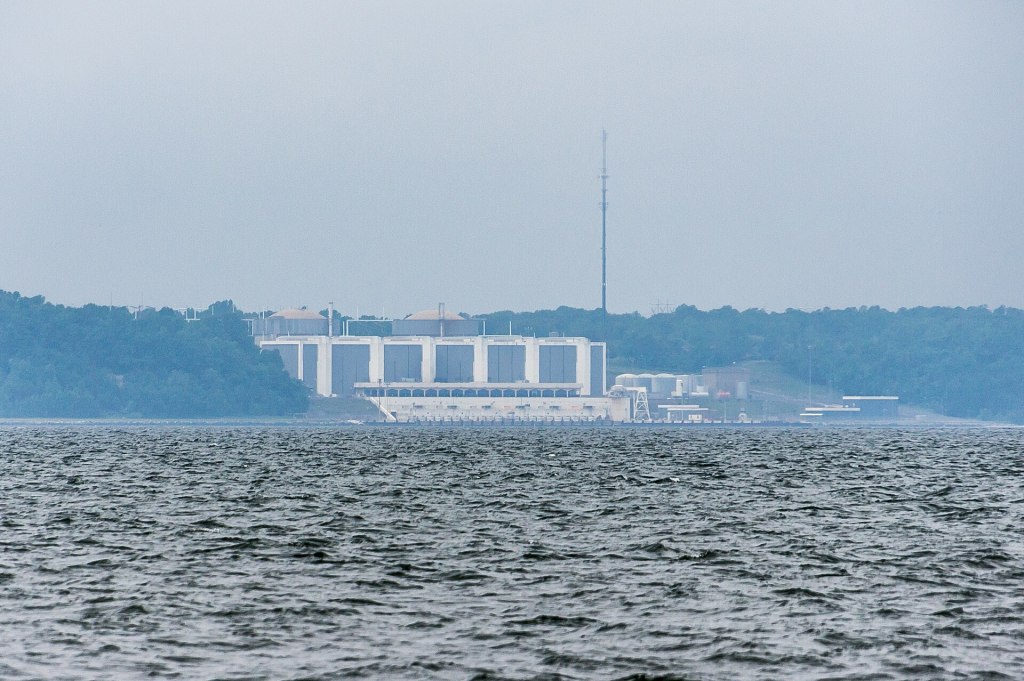
Calvert Cliffs Nuclear Power Plant, photographed in May 2012. Archive photo. Photo: Peretz Partensky / Wikimedia Commons, CC BY 2.0. Resized for display; homepage cards use a layout crop. The photograph and its display crop remain available under CC BY 2.0.
MARKETS
Amazon and Constellation Energy have announced a 20-year power purchase agreement covering 690 MW from the Calvert Cliffs nuclear plant in Maryland. Most of that is existing output. About 190 MW is new generating capacity, which Constellation expects to come online between 2030 and 2032 through uprates, alongside improvements across the 1,790 MW plant. The agreement was announced in September 2026.
Two numbers need to be kept apart. 690 MW is the total power covered by the long-term agreement. About 190 MW is the additional capacity Constellation expects to add through uprates. The transaction does not create 690 MW of new nuclear capacity. Most of the contracted power comes from reactors already operating at Calvert Cliffs.
Why an existing-plant contract still matters
Even without large amounts of new capacity, a 20-year contract changes the economics of an existing plant. Constellation describes the agreement as supporting investment, including improvements across the whole 1,790 MW plant and the roughly 190 MW of new capacity. Long-term revenue reduces the risk of that capital spending. It also supports the case for keeping the plant running over the long term, which is itself a reliability gain on the grid.
What remains prospective
The 190 MW of new capacity is expected, not delivered. Its timing, between 2030 and 2032, depends on the investment programme and on regulatory approval of the uprates. The announcement is a commercial agreement, and the physical expansion it is meant to fund lies several years ahead. Until the uprates are approved, installed and tested, the 190 MW should be reported as expected capacity, not as capacity added to the grid.
Part of a broader pattern
The deal sits alongside Constellation’s larger agreement with Google, announced in October, which is intended to add about 890 MW through uprates at 11 units. Together they show technology companies using long-term contracts with existing nuclear operators to secure firm, low-carbon supply. The contracts also make additional output from those plants financeable.
For policymakers, these deals raise practical questions. How should uprates and life extensions be licensed so they are not delayed unnecessarily? How should grid and market rules treat large contracts between data-centre operators and existing generators? The answers will shape how much extra output can be unlocked from the existing fleet.
Why it matters
Long-term commercial demand can make investment in additional nuclear output economically possible. That holds even when most of the contracted power already exists. The new 190 MW, and the plant-wide investment behind it, depends on revenue certainty that a 20-year buyer provides.
GNEI significance
GNEI interpretation: this section is analysis, not factual reporting.
GNEI interpretation: the story is less about headline megawatts than about financing. Long-term private demand is making it viable to expand and sustain existing nuclear assets. Reporting must keep total contracted power and genuinely new capacity strictly separate.

