
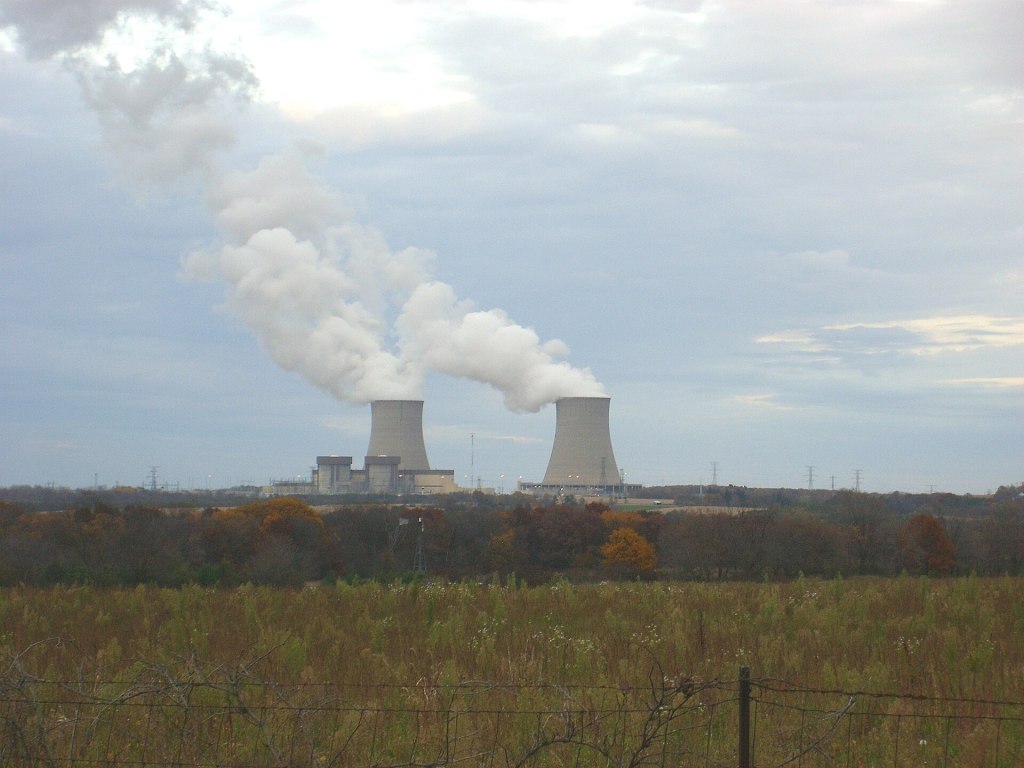
Byron Nuclear Generating Station, Illinois, photographed in 2009. Archive fleet image; not documentation of the announced uprates. Photo: Jarhead62 / Wikimedia Commons, CC BY-SA 3.0. Resized for display; homepage cards use a layout crop. The photograph and its display crop remain available under CC BY-SA 3.0.
MARKETS / DEPLOYMENT
On 6 October 2026, Google and Constellation Energy announced a 20-year power purchase agreement intended to enable about 890 MW of additional nuclear capacity on the PJM Interconnection grid. The capacity would come from uprates, meaning investments in new equipment and technology that raise the thermal and electrical efficiency of 11 Constellation-owned nuclear units in Illinois, Pennsylvania and New Jersey. Constellation expects the first uprate to be delivered by 2028.
The 890 MW is incremental capacity at existing plants, not a new reactor. Constellation describes it as equal to the output of several small modular reactors or one large conventional reactor. That comparison is about scale. It does not mean any new plant is being built.
How uprates work
An uprate increases the power a licensed reactor is permitted to produce, usually through equipment upgrades and improved efficiency. Uprates generally need regulatory approval, but they use existing sites, grid connections, workforces and licences. That typically makes them faster and less risky than new construction. Constellation’s announcement links the investment directly to the long-term contract with Google: the 20-year agreement provides the revenue certainty to justify the capital spending.
What has and has not happened
What happened on 6 October is a commercial agreement. The capacity figures and the 2028 date for the first uprate are company projections. The announcement does not tell us which of the 11 units will be uprated by how much, when each uprate will receive regulatory approval, or the cost of each unit’s uprate. Constellation puts the overall investment at more than $4.3 billion. Those details will determine how quickly the full 890 MW reaches the grid. Electricity buyers and grid operators will judge the deal on whether it adds firm supply, not on the headline number.
A new kind of buyer
The deal comes as technology companies sign long-term nuclear agreements across the United States. Amazon separately signed a 20-year agreement covering 690 MW from Constellation’s Calvert Cliffs plant, of which about 190 MW is expected to be new uprate capacity. Google also has an agreement with Kairos Power for advanced reactors. For Constellation, the Google contract turns rising demand from data centres into a financing case for expanding existing assets. For Google, it buys a share of firm, low-carbon supply on a grid where demand forecasts are rising quickly.
The agreement also points to a quieter route to more nuclear output. Before any new advanced reactor is built, existing fleets can be upgraded, and the economics of doing so depend on long-term buyers willing to share the cost.
Why it matters
Long-term contracts from large private buyers are becoming a source of finance for additional nuclear capacity. Uprates can add firm power faster than new construction, so tech-company demand could expand nuclear output well before the first advanced reactors reach commercial scale.
GNEI significance
GNEI interpretation: this section is analysis, not factual reporting.
GNEI interpretation: large private electricity buyers, particularly technology companies, are emerging as drivers of additional nuclear generation. Abundance can come from expanding existing assets as well as from new reactors. Market demand, not only public policy, is starting to pay for it.

