
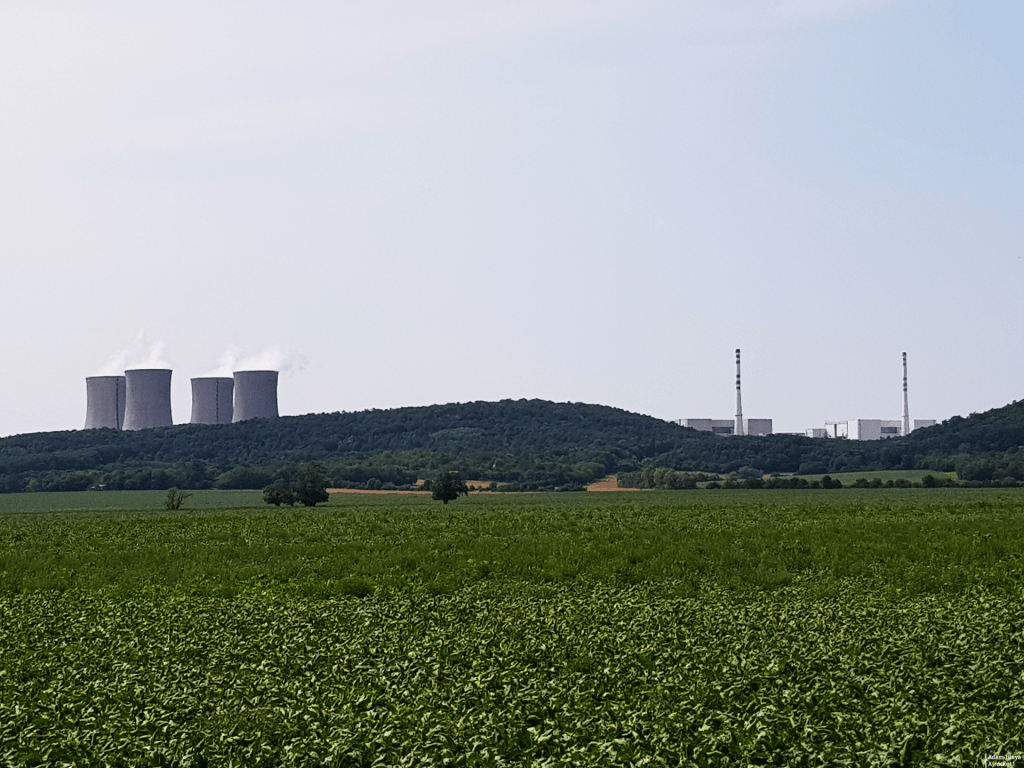
Mochovce nuclear power station, photographed in July 2026. Site photograph; not the October grid-connection event. Photo: Ajrocket1 / Wikimedia Commons, CC BY-SA 4.0. Resized for display; homepage cards use a layout crop. The photograph and its display crop remain available under CC BY-SA 4.0.
GLOBAL DEPLOYMENT
Slovakia’s Mochovce Unit 4, a 471 MW VVER-440 pressurised water reactor operated by Slovenské elektrárne, was connected to the national grid for the first time at 20:41 on 15 October 2026. It began supplying electricity at 20% reactor power. The milestone follows first criticality on 6 August 2026 and the nuclear regulator ÚJD SR’s approval of power start-up on 18 September. Construction of the unit began in 1986.
The commissioning sequence
- 29 June – 4 July 2026: fuel loaded into the reactor, with inspectors from ÚJD SR and the IAEA present.
- 6 August 2026: first sustained criticality, followed by physical start-up tests that ran until 30 August.
- 18 September 2026: ÚJD SR approved the power start-up phase. Power start-up began on 21 September.
- 15 October 2026: first grid synchronisation, of the first of two turbine generators.
When it approved power start-up, ÚJD SR said the physical start-up criteria had been met. It also recorded low-severity deficiencies and some mismatches between test-programme criteria and the source documentation. The affected tests were re-evaluated against the correct criteria and judged successful, and the regulator asked for the documentation deficiencies to be corrected. That kind of detail is normal in commissioning, and it is worth reporting.
What remains before commercial operation
Grid connection is not the end of commissioning. The second turbine generator still has to be synchronised. The unit then has to pass tests at rising power levels and complete a 144-hour run at full power before commercial operation. Once fully operational, Slovenské elektrárne expects the unit to generate about 3.5 TWh a year, roughly 13% of Slovakia’s current electricity consumption. That figure is a company projection.
A very long road
Construction of Mochovce 3 and 4 began in 1986 and stalled in 1992. The units were completed decades later. Slovakia already gets most of its electricity from nuclear power. Once Unit 4 is operating, it adds long-lived domestic firm capacity in a country with a strong record of operating nuclear plants.
The project’s history is a reminder that nuclear delivery depends on far more than reactor technology. Financing, political continuity, supply chains, regulatory processes and project management all shaped this outcome. A reactor started in the 1980s and connected in 2026 is both an engineering success and a cautionary tale.
Why it matters
Mochovce 4 adds firm, domestic, low-carbon electricity to a European grid for decades to come. Its 40-year construction history also shows how much delivery models, financing and regulatory processes shape the cost and timing of nuclear power, often more than the reactor design itself.
GNEI significance
GNEI interpretation: this section is analysis, not factual reporting.
GNEI interpretation: this is not a simple success story. Once online, the unit adds long-lived firm power. Its extraordinary construction history shows why GNEI argues that nuclear construction economics, project delivery and regulatory systems need radical improvement if nuclear is to scale.
Primary source
Slovenské elektrárne, “Mochovce Unit 4 Starts Supplying Electricity to the Grid”, 15 Oct 2026

