
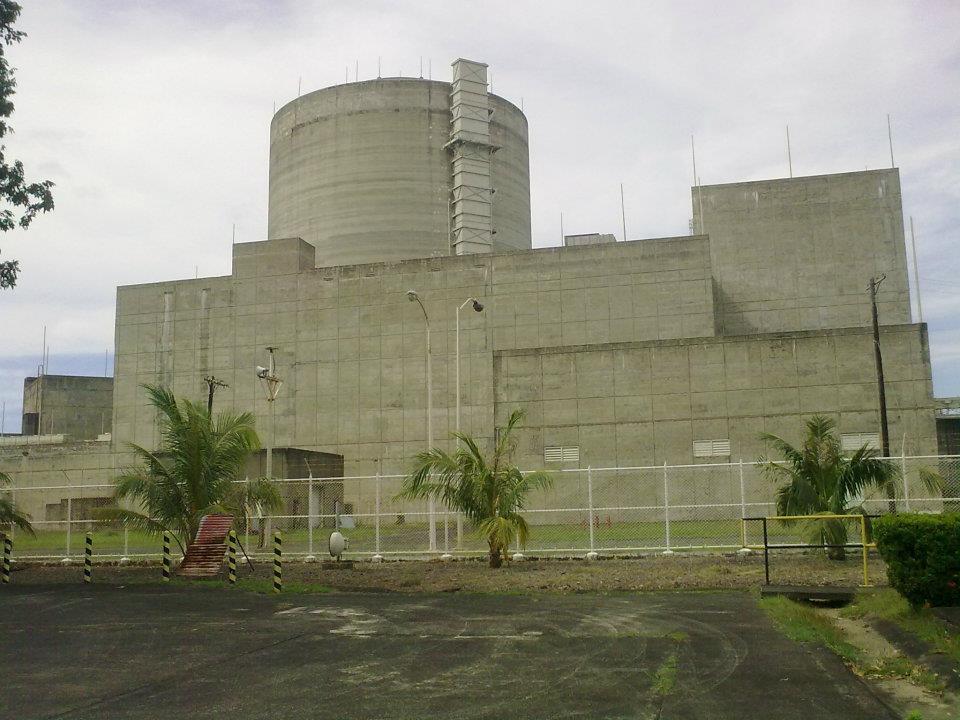
Bataan Nuclear Power Plant, photographed in 2011. The plant never entered operation; background image, not a project awarded under the proposed tender. Photo: Jiru27 / Wikimedia Commons, CC BY-SA 3.0. Resized for display; homepage cards use a layout crop. The photograph and its display crop remain available under CC BY-SA 3.0.
POLICY / REGULATION
The Philippine Department of Energy (DOE) is finalising rules for the country’s first competitive tender for nuclear generation capacity. The rules support a government target of nuclear power entering the mix from 2032, starting with 1,200 MW. A revised draft published for consultation in September 2026 moves towards staged procurement, with delivery schedules for each project. In October, the government linked its renewed interest in nuclear to rising demand from data centres and AI, and to the country’s dependence on imported fuel.
The DOE’s draft department circular sets out how the government would competitively procure nuclear capacity, and how the winners would deliver it. It covers capacity blocks, sites, grid connection, licensing milestones, delivery obligations and pricing. It remains under consultation and has not been finalised.
Three timelines, from three sources
- 2032 (Philippine Energy Plan): the government’s target for the first 1,200 MW of nuclear capacity, rising to 2,400 MW by 2035 and 4,800 MW by 2050.
- June 2026 draft circular, as reported by Philstar on 24 June 2026: a first tender in June 2027, an award by December 2027, and delivery beginning only in 2038, staggered over about ten years.
- September 2026 revised DOE draft: staged procurement, with delivery schedules that take into account site development, technology, financing, licensing and grid readiness. It repeats the policy target of nuclear entering the mix from 2032, with 1,200 MW initially.
These timelines come from different documents and serve different purposes. The 2032 figure is a policy target. The 2038 date was a procurement assumption in an earlier draft. The revised draft no longer sets a single delivery date in its public summary and makes delivery depend on each project.
Who decides what
The revised draft keeps procurement and safety regulation separate. Winning a tender would not authorise anyone to build or operate a nuclear plant. Construction and other regulated activities could proceed only with authorisation from the Philippine Atomic Energy Regulatory Authority (PhilATOM), which keeps responsibility for siting, construction, commissioning and operation. The Energy Regulatory Commission would set the price ceiling or tariff method for each tender round. Bids above the ceiling could be disqualified.
The demand case
On 11 October 2026, the Presidential Communications Office reported President Ferdinand Marcos Jr. saying the government is serious about nuclear power. He cited expected demand from data centres and AI, and the vulnerability that comes from relying on imported fuels. The Philippines created an independent nuclear regulator by law in 2025. It still has no operating nuclear power plant. The Bataan plant, built in the 1970s and 1980s, never generated electricity.
The open questions are practical. Which sites will be offered? What price ceiling will the regulator set? Will the grid be ready? And can PhilATOM build licensing capacity quickly enough to match the procurement schedule?
Why it matters
The Philippines is moving from a nuclear target to the machinery needed to deliver one: competitive procurement, pricing rules and a separate safety regulator. The gap between its political target and the procurement schedules shows how much institutional work stands between ambition and electricity.
GNEI significance
GNEI interpretation: this section is analysis, not factual reporting.
The Philippines is not merely announcing a nuclear ambition; it is beginning to build the regulatory and competitive procurement architecture needed to translate rising electricity demand into actual nuclear deployment. GNEI interpretation: the real test is whether procurement, regulation, licensing, financing, sites and grid infrastructure can turn the target into deployment.

